

Creatively Languaging the Value of Knowledge Management in Your Organization
SESSION RESOURCES
Review the slides - just pause the video as needed
Note there is no voiceover to this video. For a detailed walkthrough of the presentation, visit the Knovolution Academy or contact Janine Weightman directly.
Activity Support
In the session, we reflected on how we could better articulate the value of KM using techniques from the entrepreneurial world. I summarized the top 4 lessons from my experience and provided a basic activity for each lesson to help attendees articulate their value propositions. Check them out below, plus the extra references I mentioned in the workshop.
Know Yourself
I began my entrepreneurial journey with much self reflection. I was forever being asked 'what's your 'why', Janine?'. Everyone seemed to want me to boil things down to one simple sentence. As I sat with my umpteenth cup of tea, I wondered if I really knew why I was embarking on this path. I found the following two books instrumental to my progress in those early stages of setting up Knovolution. The learning and understanding has remained and shaped both myself and the business ever since.
'Find Your Why' - Simon Sinek https://simonsinek.com/books/find-your-why/
'Business for Punks' - James Watt https://www.amazon.co.uk/Business-Punks-Break-Rules-BrewDog/dp/0241202892
Know Your Audience
Trying to narrow down who my ideal client was became an obsession! I found that the usual guidance on demographics to be fairly useless in my case. I also found it incredibly challenging to settle on 'selling one thing to one person' and shaping my niche. I muddled through for quite some time, however this was a great discovery process. Visiting business expos, talking to people, and trying out my pitches helped me to learn more about my ideal client. I also found it invaluable to learn about their challenges, objections, and desires which ultimately influenced service design.
Here are my go to tools if I were to do this again:
- Organizational ReWilding and the 7 Stages of Growth helped me understand small-medium enterprises. See the section below for more detailed information.
- Helen Tudor has been a great inspiration for me. Although she specializes in helping business owners get leads from LinkedIn (https://getleadsfromlinkedin.com/5daychallengereg/), I've found her teachings insightful and they helped me nail who my ideal client is https://helenpritchardonline.com/
- Check out the templates on Miro for example to help you build profiles for your ideal client avatars.
- Check out Tad Hargrave's 'Five Levels of Your Ideal Client' from Marketing For Hippies to build a profile https://www.youtube.com/watch?v=keC-YSPl43w. I like his prioritisation of characteristics and people-focus.
- I first came across the method of identifying customer frictions through the FORTH Innovation Methodology. It is part of the Observe & Learn Phase. Check out the 'Inspiration for Innovation' channel for some insight on using innovation techniques to shape your KM interventions https://www.youtube.com/c/INSPIRATIONFORINNOVATION
Know Your Brand
It was important to me to build the Knovolution brand mainly as a tool/backdrop/context to help me 'sell' the idea of KM. Standing there having my first conversations with people as a consultant felt very bare and abstract. I felt the absence of a common language and understanding. I also wanted to think through my brand as a foundation to help me make decisions. Stepping into the entrepreneurial world felt like a maze of choices and opportunities; having a brand gave me direction and consistency in helping me decide and make progress.
I am not saying you need a full blown brand strategy to accompany your KM interventions. I think going through the critical and creative thinking process however provides much insight. Knowing your vibe can support messaging, decisions, and ultimately the buy-in of your target supporters. I found these resources useful:
- Helen Tudor's LinkedIn headline template encouraged me to describe succinctly what I do in relation to my ideal client. Get her free template here https://getleadsfromlinkedin.com/free-headline-guide-for-linkedin/
- Find a graphic designer and try explaining your KM intervention. See how the graphic designer interprets it and be open to the questions they ask you in their effort to understand your mission. even if you don't end up using graphics, the process is useful.
- I found Column Five's resources helpful. Not all of it was relevant, as they focus on content marketing, however their Brand Strategy Toolkit had some handy templates. I found the Brand Messaging Template simple and effective (image is displayed on the resource page) https://www.columnfivemedia.com/resources/brand-strategy-brand-toolkit/
- Attempt to describe the problem you solve in one word. The trick is to think bigger or laterally. When I was working with Kim Youdan on my brand, she explained how the problem she solved for clients was 'misrepresentation' through her work in creating brand identities. I found this inspiring.
Build Rapport
We all have our own styles and unconscious ways of interacting with each other to build rapport. I've found these resources particularly helpful:
- Through various coaching workshops in my time, I've learned about clean questioning. I don't have any particular resources but this link demonstrates some of the questioning I am referring to https://cleanchange.co.uk/clean-language-questions-of-david-grove/
- Somewhat controversial, I ended up doing my Certified Practitioner in Neuro-Linguistic Programming (NLP) out of curiosity for the basic tools of this communication method. I highly recommend my trainer, Lou Laggan, and her resources on the subject https://www.loulaggancoaching.co.uk/what-is-nlp/. The key themes that stood out to me was developing our sensory acuity, intentional use of language patterns, eye accessing cues, and the presuppositions of NLP. Decorating your mind with these subjects will positively influence your communication style to help you build rapport.
- Using 'sales talk' can be positive in terms of understanding your client and winning them over. It should be done ethically, not manipulatively. This Hubspot article and free download is a useful resource to start blending 'selling KM' into your repertoire https://blog.hubspot.com/sales/make-your-marketing-message-pop-with-nlp.
Get further insight on the 7 Stages of Growth
I use the Stages of Growth as a tool to help me identify business related challenges for SMEs. We didn't explore this in detail in the session, however sharing a more detailed overview here for anyone who is interested. Stay tuned for more resources in the Knovolution Academy to help you navigate your stage of growth.
Stage 1 - Startup (1-10 employees)
In this stage, passion and guts are the fuel. To envision a company where none existed before and to transform that vision into a living reality is not a simple task. Read more about Stage 1 https://www.rewildgroup.com/blog/stage-1-starting-up-a-company-embrace-the-chaos
Stage 2 - Ramp-up (11-19 employees)
In this Stage, survival is quickly replaced with growth as the top priority. The business owner is starting to worry about the management of their growing staff and many other issues that can arise as a company begins to ramp up. Read more about Stage 2 https://www.rewildgroup.com/blog/stage-2-ready-to-ramp.
Stage 3 - Delegation (20-34 employees)
In this Stage, the leader is no longer in control of the organization entirely on his or her own. Work and decision-making authority must now be delegated. Read more about Stage 3 https://www.rewildgroup.com/blog/2019/7/11/stage-3-the-art-of-delegation-takes-on-new-meaning.
Stage 4 - Professional (35-57 employees)
In this stage, the CEO at this Professional Stage must invest the time and money to either hire or train strong professional managers. Having a strong management team in place will help the company through this Stage of complexity, as well as set the company up for future success. Read more about Stage 4https://www.rewildgroup.com/blog/2019/7/11/stage-4-complexity-drives-need-for-experienced-managers .
Stage 5 - Integration (58-95 employees)
In this Stage, the CEO must take the independent group of managers from Stage 4 and get them to work together as a harmonious, synergistic team. Read more about Stage 5 https://www.rewildgroup.com/blog/2019/7/12/synergy-equals-strength-as-company-matures.
Stage 6 - Strategic (96-160 employees)
In this Stage, the risk of not seeing the larger strategic picture could cause the ‘too little, too late’ syndrome. The planning horizon must go beyond a year in order to compete in the marketplace. Read more about Stage 6 https://www.rewildgroup.com/blog/2019/7/12/stage-6-lack-of-strategy-will-kill-you.
Stage 7 - Visionary (161-350 employees)
In this Stage, the CEO’s mission is to improve performance by stimulating higher levels of innovation and employee authorship. It is the stage of growth wherein the CEO makes an internal entrepreneurial “call to arms.” Read more about Stage 7 https://www.rewildgroup.com/blog/2019/7/12/stage-7-creating-a-vision-for-the-future.
Articles and Tools
Check out this article for an overview of the Stages of Growth and Organizational ReWilding https://www.rewildgroup.com/blog/2021/1/22/what-are-the-stages-of-growth
The Growth Matrix Tool is a handy overview of all the elements and characteristics for SME growth https://www.rewildgroup.com/lp-tool-matrix
The 60-minute guidebook series is a great resource to dive into specific stages and elements https://www.rewildgroup.com/lp-sog-guidebook
The ReWild Business Assessment is an investment that will show you where the business is misaligned for its stage of growth and how to resolve it https://www.rewildgroup.com/lpassessmentrbainfo
Further self-guided resources are available at https://www.rewildgroup.com/free-resources
Get in touch if you'd like direct support in navigating the resources or your stage of growth!
Check out these other resources
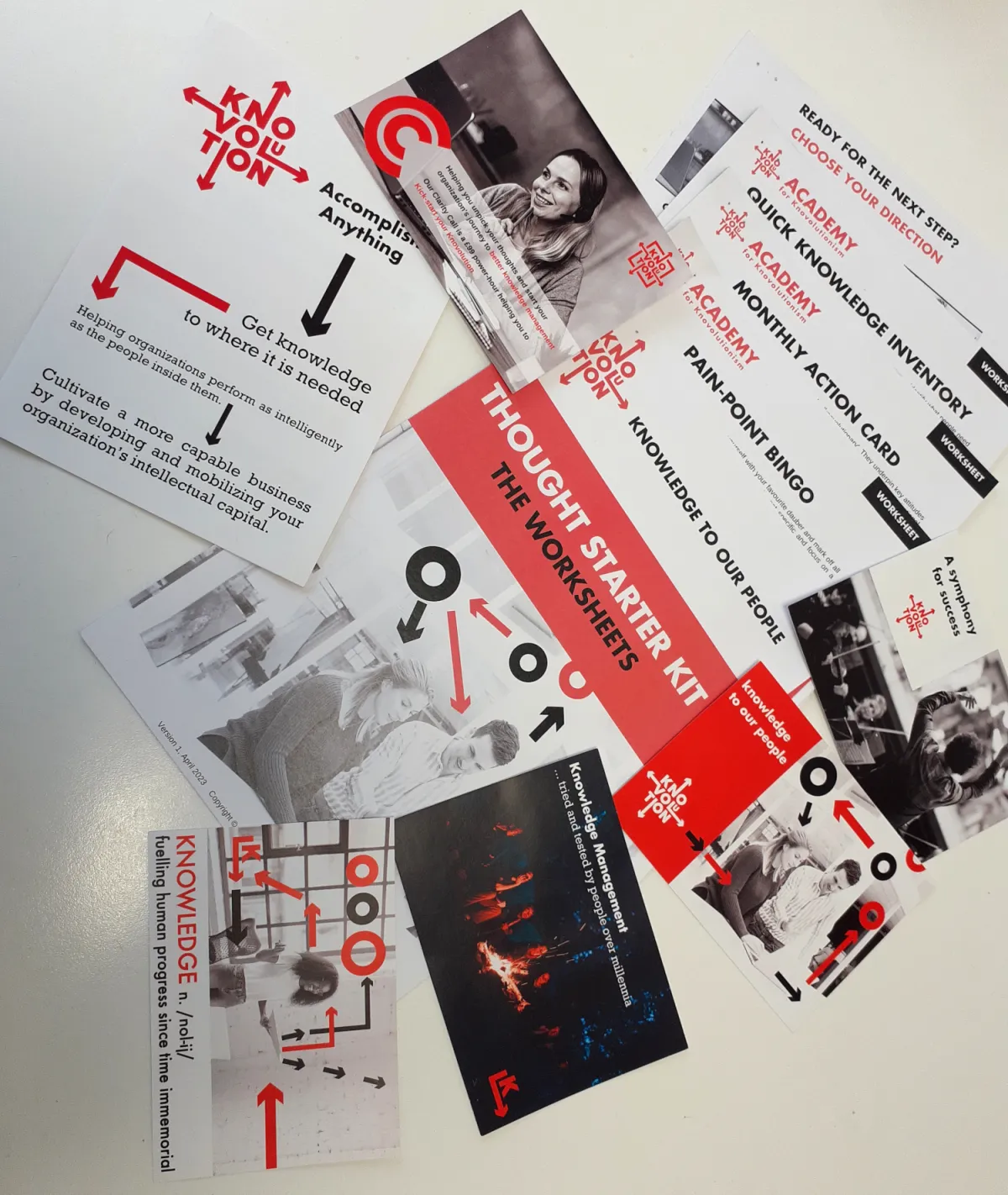
Thought Starter Kit
Access the free resources to kickstart your ideas and actions around knowledge management for your company.

Knovoscope App
Access the free, interactive app to start articulating your stories around knowledge management.
Clarity Call
Grab a 1-1 power-hour with Janine to discuss you specific circumstances or get further advice.

Virtual Coffee
Fancy a catch-up? Happy to arrange a time to discuss your specific requirements for knowledge management
Knovolution Newsletter
Sign-up
By entering your email address you will also be added to the Knovolution mailing list for future communications.
Copyright Knovolution 2023 Built with Modern